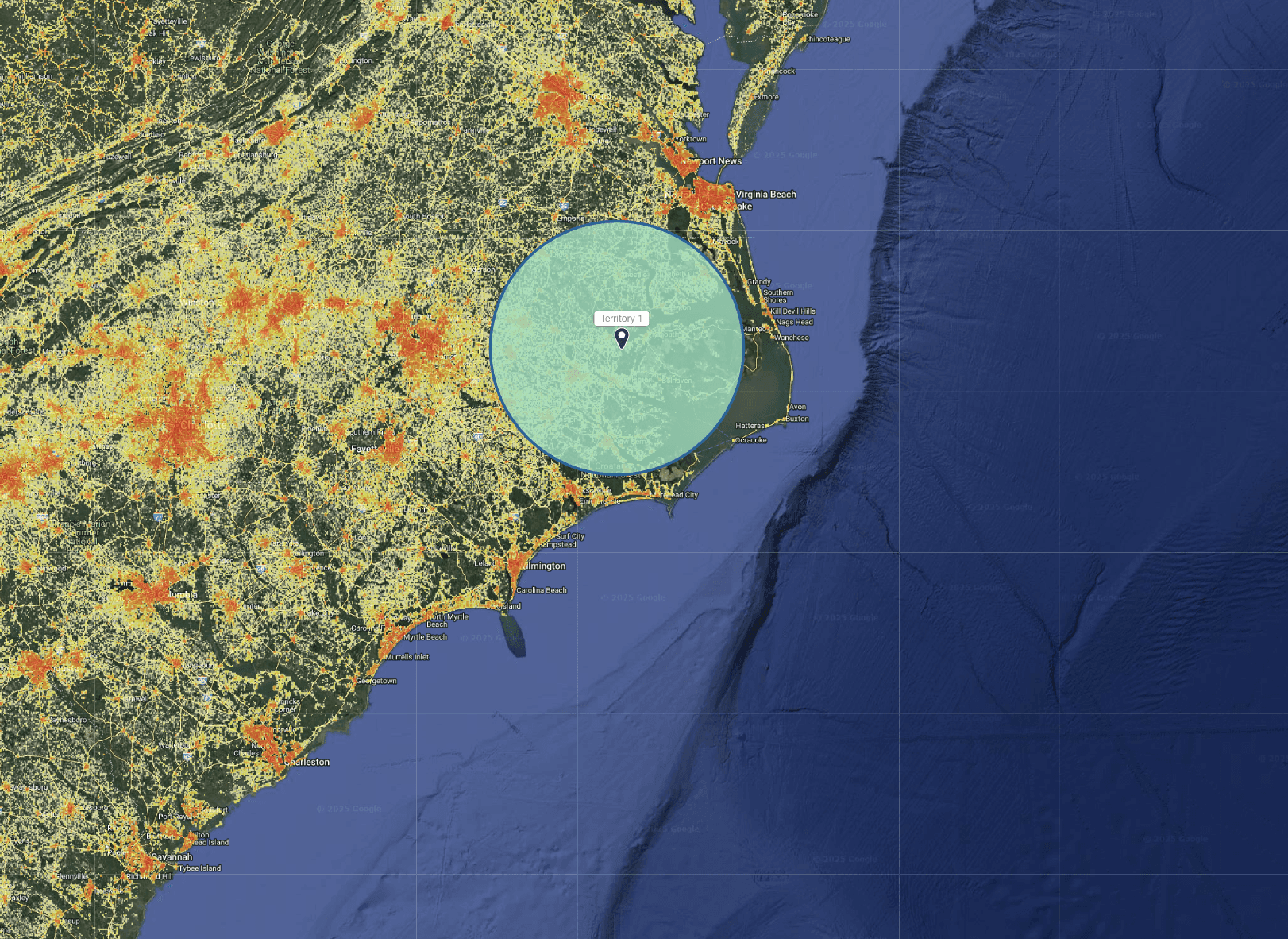
Use Population Explorer to measure populations within refugee or IDP camps, using mapped boundaries or field-drawn polygons for planning and coordination.
Overview
Accurate camp population estimates are central to humanitarian response teams —determining how much water, food, and health services are needed for displaced families. Population Explorer (PopEx) allows rapid, map-based estimation of populations within defined camp boundaries, without requiring GIS software or technical expertise.
Using WorldPop or LandScan data, PopEx provides baseline demographic estimates for camps and nearby host communities. These figures can be refined with on-the-ground registration or satellite validation, giving coordination teams a transparent and repeatable method to measure camp populations in real time. These same workflows may be applied to healthcare clinic site selection or other private sector industries.
Scenario Example
A field IM officer for UNHCR receives recent drone imagery of a newly expanded IDP camp in northeastern Nigeria. The polygons for each camp sector are drawn and uploaded to PopEx. Within minutes, the officer can calculate population and density by sector, helping WASH and shelter partners allocate resources proportionally.
Step-by-Step: Measuring Camp Populations
Start by creating a folder named after the camp (e.g., “Maiduguri IDP Camp”).
Click File → Import KML/KMZ to upload the mapped camp boundaries. Each polygon should represent one sector or zone.
If boundaries are unavailable, draw them manually with New → Create Item → Custom Polygon.
Open Layers → Settings and choose the dataset (WorldPop 2024+ or LandScan 2023). Ensure the data year matches your analysis period.
Click on each polygon to open its summary panel. Record Population Total, Density, and Income if applicable.
Export results with Export → Excel for reporting to the humanitarian coordination system.
Interpreting the Results
Camp-level population figures from PopEx represent baseline estimates. They show how many people were likely living in those areas before displacement, offering a pre-crisis denominator for planning. Field registration (UNHCR, IOM DTM) should always complement these data to adjust for recent arrivals or outflows.
Best Practices
Use the latest high-resolution dataset (WorldPop preferred).
Keep polygons aligned to visible shelters or camp boundaries for accuracy.
When possible, label each polygon by camp sector or block name.
Document who created the polygons and when they were last verified.
Example Applications
Use Case | Goal | PopEx Tool |
|---|---|---|
Camp sector analysis | Compare density between sectors | Folder Aggregation |
WASH planning | Calculate people per latrine zone | Custom Polygon |
Shelter layout planning | Assess density vs area | Population and Area Metrics |
Camp expansion feasibility | Estimate populations in proposed extensions | Custom Polygon + Export |
Verification
Compare PopEx’s population totals with official registration figures. Large discrepancies often indicate that polygons extend beyond camp limits or that satellite boundaries are outdated. PopEx provides a robust baseline but should always be validated against field enumeration.
Further Reading
Need More Help?
If you run into issues, please contact us.
Explore our latest thinking on franchise territory design, retail site selection, and the population data that powers smarter location decisions.

Jun 26, 2026
The Cornfield Effect
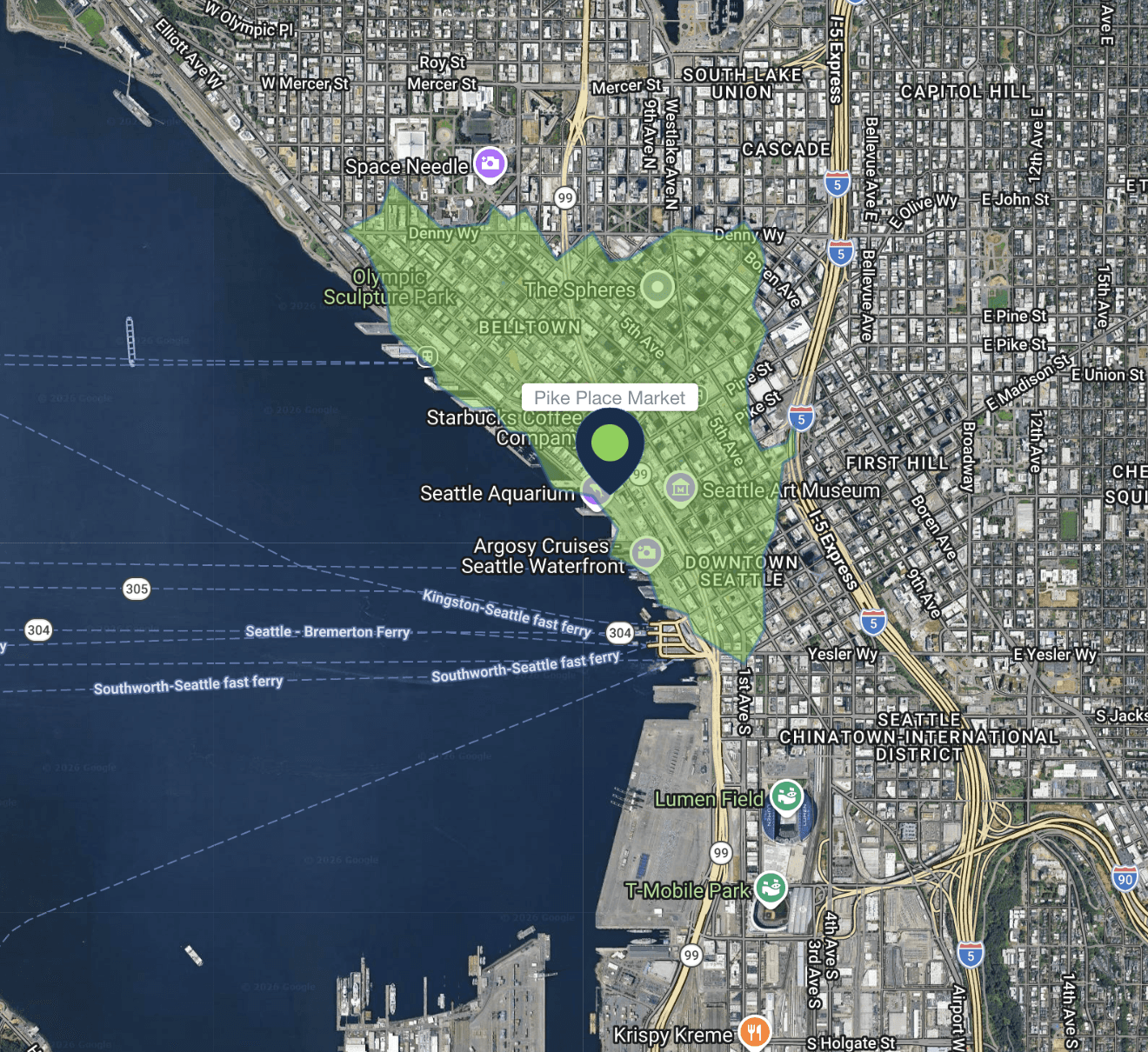
The cornfield effect is a systematic error in demographic analysis that occurs when census data attributes population to uninhabited areas (e.g., farmland, parks, industrial zones) within a census boundary. This distortion leads to overestimates of customer density and misguided location decisions with notable, negative impacts on franchise territory design and retail site selection. Constrained population models, such as WorldPop Global 2, eliminate the cornfield effect by assigning population only to areas where human settlements have been confirmed to exist.
May 22, 2026
You Can Create a Franchise Territory in Less Than 2 Minutes
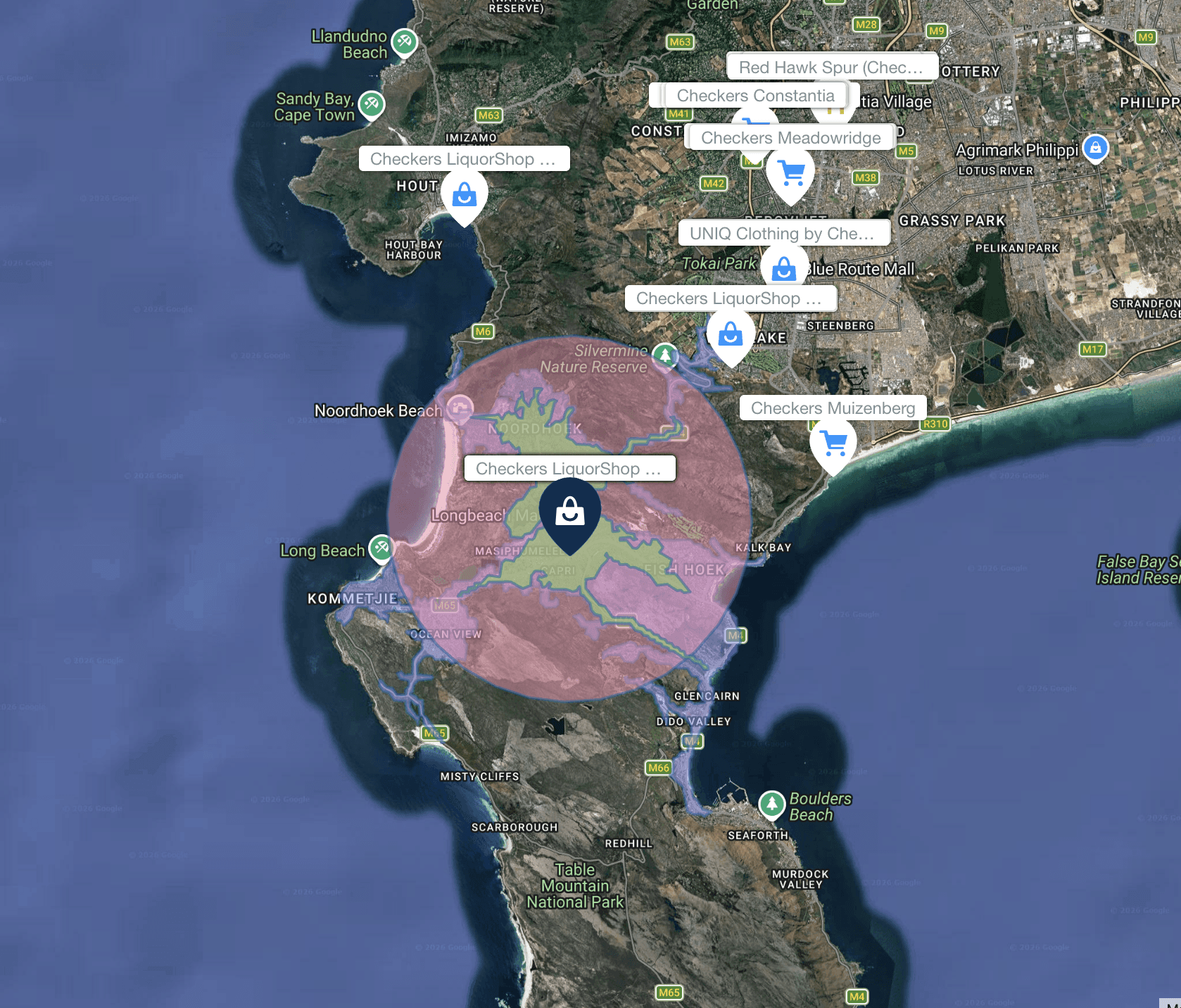
Franchise territory mapping no longer has to mean expensive consultants, complex GIS software, or weeks of setup. Modern tools let franchisors create, evaluate, and compare protected territories in minutes.
May 22, 2026
At What Point Does a Franchise Need Territory Mapping?
Not every franchise needs rigorous territory mapping on day one. But once territory decisions begin affecting franchise sales, market protection, expansion planning, and long-term network value, the stakes change quickly.