
Understand how to evaluate population around retail locations using buffers, isochrones, and demographic datasets in Population Explorer.
Overview
Retail site selection is a complex process. The first step - and probably most critical - in evaluating candidate sites is to measure the surrounding population. This is your 'catchment', the underlying base of potential buyers. If your catchment population is low, or includes the wrong demographic, you simply will not have the buyers to make your business a success. Population within a defined area serves as a proxy for market potential — the larger and denser the surrounding population, the greater the possible customer base.
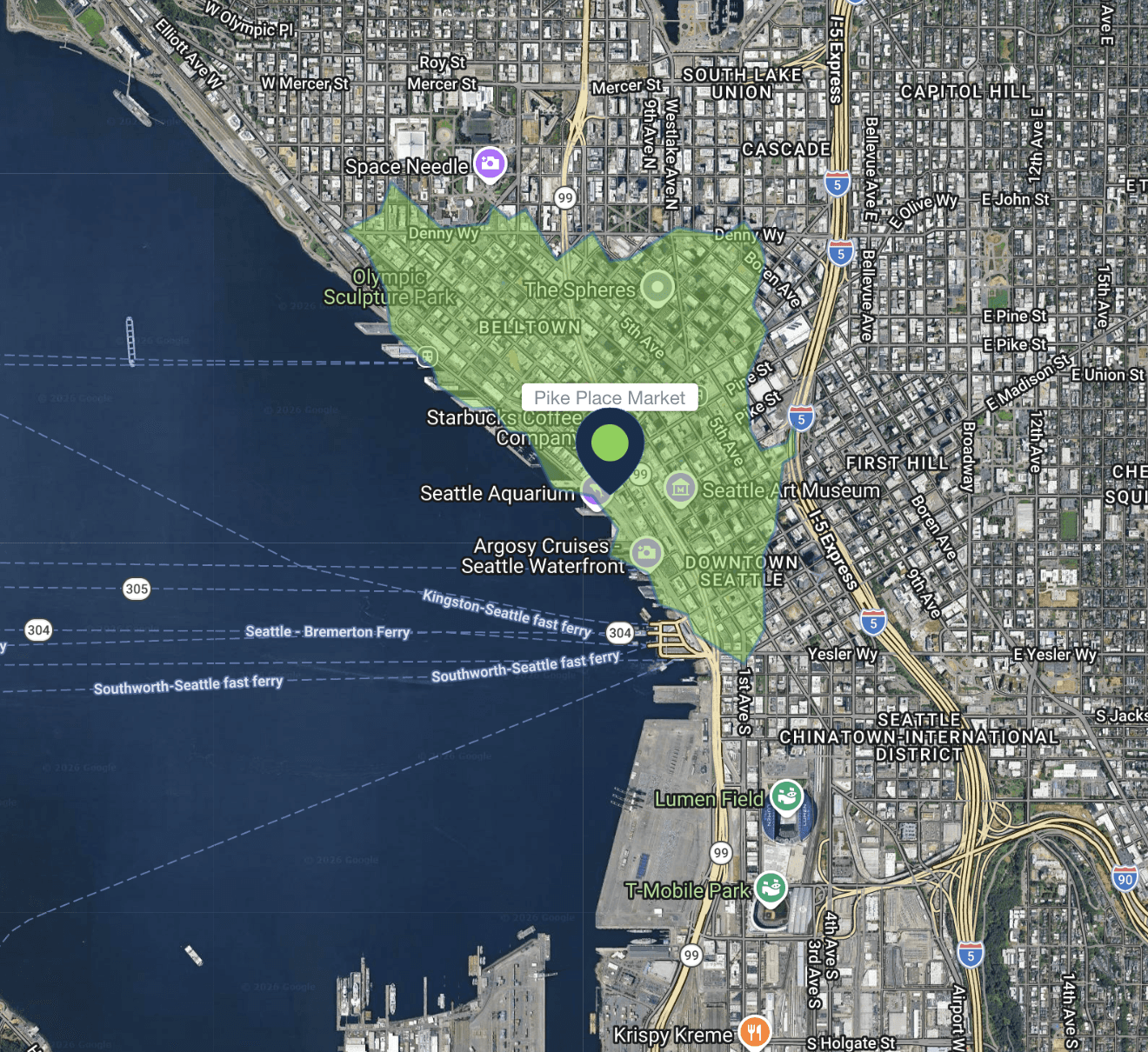
Population Explorer simplifies this analysis by combining high-resolution demographic datasets, such as LandScan and WorldPop, with mapping tools that let you draw or generate zones around your locations. These zones — called buffers or isochrones — represent the physical or travel-time distance around a site. Each one provides accurate, dataset-driven population totals and breakdowns by age or gender.
By measuring population in this way, you can compare candidate sites: identify which ones offer the best balance of reach, population density, and accessibility. This process is critical in site selection, franchise expansion, and network optimization, where decisions must be grounded in objective population metrics rather than intuition alone.
Population Explorer calculates these totals automatically when you draw a buffer, create an isochrone, or import a shape from an external KML file. The application’s folder summaries and Excel exports make it easy to compare results across sites or visualize coverage gaps.
Steps
1. Create a Folder and Site
In the left drawer, click New → Create Folder. Then click New → Create Item → Buffered Point or Isochrone to define your study area.
→ Watch this quick video to learn how to place buffers.
2. Select Data Layer
Open Layers → Settings to choose between LandScan or WorldPop datasets, and select the data year you want to use.
3. Review Population Metrics
Once generated, open the item summary panel to view total population, density, and demographic details. You can also export these figures for offline review.
Set Filters to Narrow Down Options
Set filters that represent your ideal density, population count or demographic distribution to quickly identify optimal retail sites among hundreds of candidate sites.
Verification
Confirm that the population totals appear correctly in the folder summary panel. Export to Excel to verify that numeric values match the map-based summaries.
Next Steps
Need More Help?
If you run into issues, please contact us.
Explore our latest thinking on franchise territory design, retail site selection, and the population data that powers smarter location decisions.

Jun 26, 2026
The Cornfield Effect
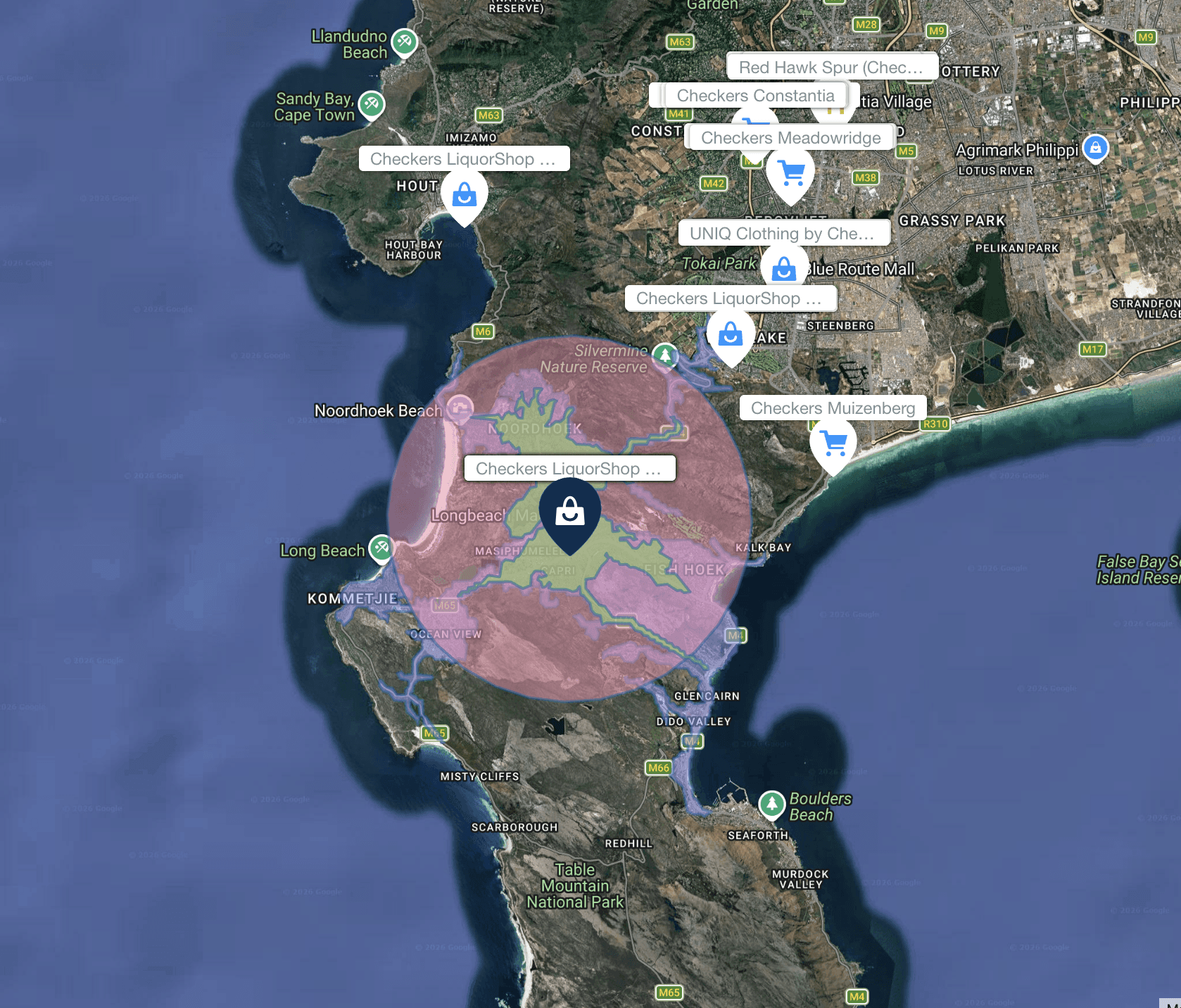
The cornfield effect is a systematic error in demographic analysis that occurs when census data attributes population to uninhabited areas (e.g., farmland, parks, industrial zones) within a census boundary. This distortion leads to overestimates of customer density and misguided location decisions with notable, negative impacts on franchise territory design and retail site selection. Constrained population models, such as WorldPop Global 2, eliminate the cornfield effect by assigning population only to areas where human settlements have been confirmed to exist.
May 22, 2026
You Can Create a Franchise Territory in Less Than 2 Minutes
Franchise territory mapping no longer has to mean expensive consultants, complex GIS software, or weeks of setup. Modern tools let franchisors create, evaluate, and compare protected territories in minutes.
May 22, 2026
At What Point Does a Franchise Need Territory Mapping?
Not every franchise needs rigorous territory mapping on day one. But once territory decisions begin affecting franchise sales, market protection, expansion planning, and long-term network value, the stakes change quickly.